


Anyone can experience joint discomfort and pain.The reasons why finger joints hurt, as well as the type of treatment for the disease that causes this pain, can be very different.Lack of timely and correct treatment can lead to loss of mobility in the affected area.Therefore, it is important to determine the cause of the problem and start therapy.
Pain when bending and straightening the fingers
Pain in the fingers not only causes discomfort, but also affects the quality of life, making even the simplest daily activities painful.Often it is very noticeable after a physical impact.
The main reasons for this phenomenon include the following:
- gout;
- bruises and fractures;
- arthritis;
- dislocation or disruption of ligament integrity;
- Kienböck's disease;
- osteoarthritis;
- synovitis;
- psoriasis;
- lupus erythematosus;
- stenotic ligamentitis;
- tunnel syndrome;
- pregnancy and childbirth;
- exposure to prolonged physical activity.
Which doctor should I contact?
Finger joints hurt (the cause and treatment may be unexpected), so you should consult a specialist without trying to self-medicate.
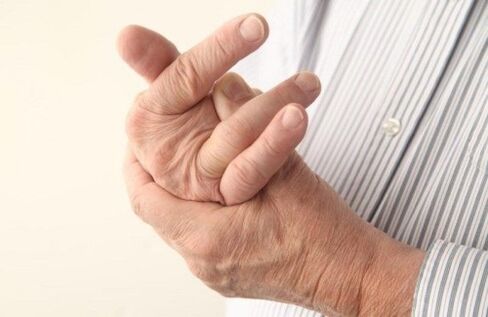
Depending on the complexity and characteristics of the condition, you may need the following doctor's help:
- Rheumatologist.
- Neuropathologist.
- Surgeon.
- Hematologist.
- Trauma specialist.
Diagnostics
There are several main methods that allow you to make a diagnosis with high accuracy:
- Radiography.Studies to help determine the presence of damage.For the most complete picture, it is necessary to take three pictures in different projections.The main disadvantage of this type of study is the impossibility of assessing the soft tissues of the hand.
- Ultrasound examination.It is prescribed as an additional step that helps establish a more accurate diagnosis.Thanks to ultrasound, it is possible to identify the consequences of injury and inflammation in soft tissues.
- Magnetic resonance imaging.It is widely used to diagnose various types of diseases.Thanks to the use of MRI, it is possible to determine not only the exact location of the pathology, but also the degree of its development.
- Electrospondylography.This very effective research method has recently begun to be used.Its main advantage is that it allows you to identify various limb diseases at an early stage.
- Computed tomography.It is carried out to get a complete picture of the disease and identify all changes in the joints and bone tissue.
- A different discography.It is often used to determine the pathology of bone tissue using special dyes.
- Joint puncture.Performed to collect fluid for analysis or administer medication.
- Skin biopsy.Taking a tissue sample for examination is very rarely prescribed.This is done to confirm or deny the diagnosis.
Gout pain
Painful finger joints: only a specialist can determine the cause and treatment.Gout is a relatively rare disease, so it is not that difficult to diagnose.It most often affects men, but today women often experience it as well.If the disease affects the hand, the thumb usually becomes inflamed.
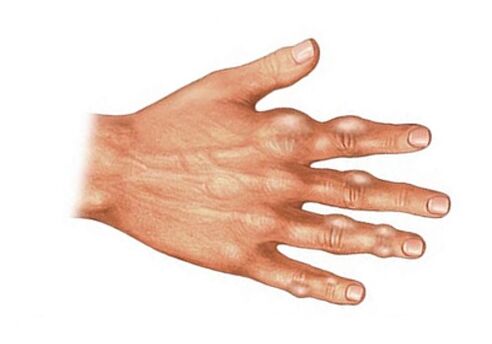
Joints become swollen, fingers become vividly red, and the skin becomes hot to the touch.
Even a light touch on the affected area leads to severe pain.This can last 3-4 days, after which the attack disappears completely.But after some time the pain happened again.At first, the interval between attacks is very long - from 1 to 8 months, but over time the picture of the disease changes.
The intervals become shorter, and the attacks become longer and more painful.If gout is not treated, the pain becomes permanent.This disease leads to the gradual destruction of articular cartilage, and a cavity is formed in the bone adjacent to it, filled with microscopic crystals of sodium urate.
This disease is well treated, and contacting a competent doctor will help reduce the pain quickly.The main condition for successful recovery is adherence to the diet prescribed by the specialist.
In the acute form of the disease, NSAIDs or specially developed drugs based on tropolone alkaloids are prescribed.Vodka compresses are acceptable as a local treatment.Xanthine oxidase inhibitors are also used.
Some folk remedies can have a significant positive effect on this disease:
- Compress mustard with soda and honey.Mustard, honey and soda taken in equal proportions are mixed thoroughly and applied to the heated joints.
- Activated carbon lotion.10 pieces of charcoal are ground and mixed with water.The mixture is applied to the joints and left overnight under the film.
- Bathe with sea salt.For one liter of very warm water, take half a spoon of sea salt.Place your hand in the resulting bathtub and wait until the water has cooled completely.
For bruises and broken bones
Finger joint injuries are usually caused by sports or careless behavior at home.It is not always possible to independently understand whether there is a fracture, but there are some signs that you should pay attention to.
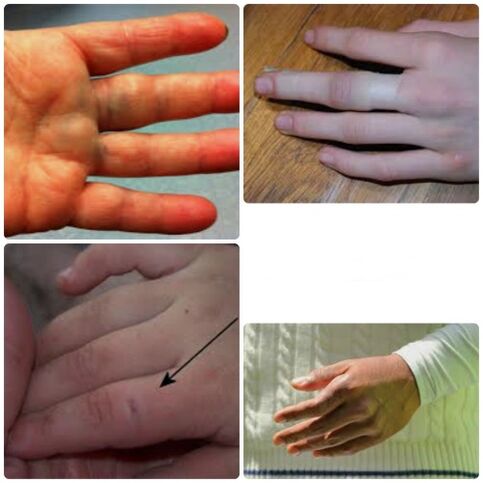
If the finger is bruised, mobility is maintained.A characteristic swelling appears, which may increase on the first day.The pain continued for several hours, after which it subsided.If the injury is severe, a severe hematoma may appear.
If the injury turns out to be more serious and the integrity of the bone is affected, this can be detected by the inability to move the finger or, on the contrary, by its abnormal mobility.In addition, with a fracture, the pain in the injured area does not decrease, but increases (this is due to the displacement of the damaged bone area).
A traumatologist can detect a fracture with the naked eye, but to confirm the diagnosis it is necessary to take an x-ray.
In case of bruises, the doctor may prescribe anti-inflammatory and painkillers, and offer ointments for external use that will relieve swelling and have a healing effect on damaged tissue.
If there is no displacement during the fracture, a special fixator is used.The period of use of the fixative is approximately 1 month.If bone fragments have been removed, they are first compared, and then casts are used for 2-3 weeks.In advanced cases, surgical intervention under general anesthesia and installation of metal wires is necessary.
After 1 month, it is removed, and the plaster is reused for up to 5 weeks.After removing the fixation device, it is important to immediately begin to "wake up" the finger through active movement.
If folk remedies are unacceptable for broken bones, then for bruises, especially small ones, they can be very useful:
- To relieve swelling, you can apply a slice of fresh potato or potato peel to the bruised finger, wrap it in a bandage and leave it for a few hours.
- Banana juice used as a lotion 2-3 times a day will help speed up the removal of bruises.
- As an anti-inflammatory agent, you can use bodyaga powder, diluted with water to form an ointment.
For dislocations and damage to ligaments
Sprains or tears of connective tissue are always painful, with an immediate onset of symptoms.This happens most often with the thumb, which is explained by the structure of the joint.
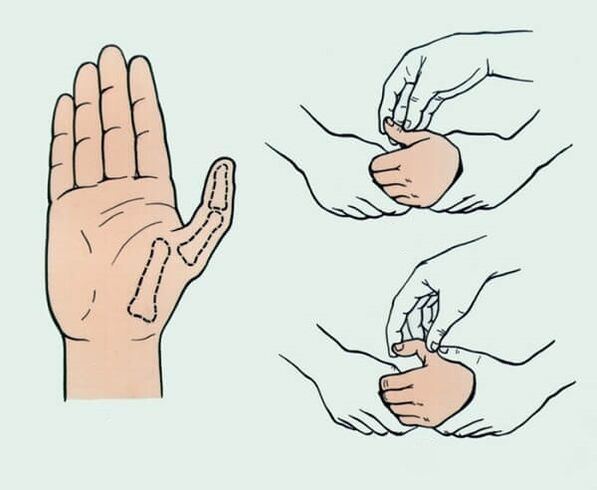
Among the signs are:
- visible deformation of joints;
- sharp pain;
- inability to bend fingers;
- joint swelling;
- pale fingers.
The doctor's actions include pain relief, realigning the joint and using a plaster cast for up to 2-3 weeks.Severe injuries may require surgery.
For arthritis
Arthritis is an inflammatory disease of the joints.It can affect any joint, but arthritis in the fingers is particularly severe.This disease is more common than arthrosis.
Normally, the joint's natural articular lubrication function is performed by a special fluid secreted by the synovial membrane.It is thanks to him that the articular cartilage can receive nutrients.Arthritis is an inflammation of this membrane.As a result, the amount of fluid released increases, its composition changes, and serous, hemorrhagic or purulent exudate begins to be released.
This disease can be identified by the following symptoms:
- movement disorders;
- sick;
- violation of the structure and deviation of the joint size from the norm;
- swelling and redness of the skin.
For hands, polyarthritis is the most typical, where lesions affect several joints at once.But sometimes inflammation of one joint also develops - monoarthritis.There are cases where arthritis is accompanied by gout.Arthritis is treated with medications, physical therapy, and massage.
NSAIDs are used to suppress the inflammatory process.The use of steroid hormones, which are injected into the joint cavity, is also common.To treat arthritis of an infectious nature, antibiotics are given, including broad-spectrum ones.Restoration of articular cartilage is ensured by taking chondroprotectors.
After the inflammation subsides, the specialist may prescribe physical therapy and therapeutic massage.
The following folk remedies can be used as additional treatment aimed at reducing symptoms:
- bath with a decoction of birch leaves;
- take warm milk with garlic juice;
- compresses made from cabbage leaves, burdock or coltsfoot.
With Kienböck's disease
The causes and treatment of diseases in which the joints of the fingers hurt, in some cases do not tolerate the slightest delay.For example, if we talk about Kienbeck's disease.It consists in disrupting the normal blood circulation of the lunate bone of the wrist and has an unpredictable course.
With this pathology, patients usually complain of pain in the wrist, which increases with exercise.MRI helps to make the most accurate diagnosis in this case.If it is possible to identify the disease at an early stage, a relatively low traumatic operation is performed - shortening the radius.
If the bone is partially destroyed, it can be replaced with an artificial implant.Physiotherapy and conservative treatment do not help to overcome the disease, but they can help relieve pain.
For osteoarthritis
Osteoarthritis is a pathological condition that affects the joints of the fingers and leads to the deterioration of the cartilage tissue and deformation of the joint.
Osteoarthritis is characterized by the following manifestations:
- feeling of stiffness in the fingers in the morning;
- joint swelling, skin redness;
- the appearance of cysts;
- increasing pain as the disease progresses.
There is no complete cure, so therapy is usually aimed at minimizing inflammation, relieving pain, slowing deformation and improving quality of life.Physiotherapy, exercise therapy and some anti-inflammatory drugs are prescribed.
The use of traditional methods will help alleviate the patient's condition:
- oatmeal compresses;
- use hot sea salt;
- compress onions;
- bath with sage, rope or chamomile.
For lupus erythematosus
Lupus erythematosus is a chronic autoimmune disease.Currently, the exact cause of its development is unknown, which complicates treatment.The most common manifestation of the disease is joint damage.Painful sensations can occur in one or several joints and have varying duration and intensity.
Painful finger joints - causes and treatment may be unexpected for the patient.For example, lupus erythematosus cannot be completely cured, so the main goal is sustained remission.The basis of treatment is vitamin D and 4-aminoquinoline derivatives;for active manifestations of lupus, hormone therapy is prescribed.
For synovitis
Synovitis is an inflammatory process in which fluid accumulates in the cavity of the joint shell.As a rule, it develops only in one joint.It can be caused by an injury or one of the above diseases.
Usually, synovitis is accompanied by joint enlargement, pain and a bursting sensation.Sometimes malaise and slight hyperthermia occur.Since synovitis is often a symptom manifestation of other diseases, patients are referred to appropriate specialists: endocrinologists, hematologists.If the etiology of synovitis cannot be determined, hospitalization may be necessary.
For psoriasis
Psoriasis is a chronic disease that affects the surface of the skin, nails, and in severe cases, joints.A specific plaque first appears on the surface of the hand, and then begins to spread.Psoriasis of the joints is considered one of the most severe forms of the disease.It first affects the interphalangeal joint and then spreads to other articular cartilage.
The treatment of joint psoriasis is similar to the treatment of arthritis: anti-inflammatory drugs, immunomodulators, and sometimes corticosteroid hormones are used.In severe forms of the disease, blood purification is sometimes prescribed.
Psoriasis is difficult to treat, so therapy can be supplemented by using traditional methods:
- salt bath for hands;
- compress crushed garlic;
- apply fish oil to the plaque;
- wipe the skin with celandine-based lotion.
With stenosing ligamentitis
Ligamentitis is an inflammatory lesion of the ligaments, caused by injury or infectious disease.It is accompanied by discomfort and pain in the ligaments and a significant decrease in work capacity.Usually localized in one particular ligament.
Treatment, depending on the cause of the disease, can be conservative (joint immobilization, drug therapy with anti-inflammatory drugs and glucocorticosteroids, physiotherapy) or surgery.
Folk remedies help relieve discomfort in the early stages of the disease:
- aloe leaf compress;
- raw potato compresses;
- calendula ointment.
For carpal tunnel syndrome
Carpal tunnel syndrome occurs due to compression of the median nerve.
Before contacting the doctor, it can be recognized easily, because it has very specific signs:
- finger numbness;
- tingling;
- hand weakness;
- unpleasant, but not a sharp pain in the wrist.
Treatment consists of fixing the wrist in the correct position, electrophoresis with anesthesia, prescription of NSAIDs, and local administration of glucocorticoids.Advanced disease requires surgical intervention.
Finger joint pain during pregnancy
In addition to the diseases listed, a pregnant woman may experience pain in her finger joints for the following reasons:
- Production of the relaxin hormone, which is responsible for softening the joints.This is necessary for a more natural and painless birthing process, but it has a detrimental effect on the joints of the entire body.This condition has no cure, but disappears after the baby is born.
- Lack of calcium, vitamins and other nutrients.You can find out what exactly your body is lacking with a blood test.
To relieve symptoms, a bath with the addition of sea salt, birch leaves, pine needles or bran is most suitable.
After giving birth
Within 2 weeks after childbirth, a woman may experience joint pain associated with the period of restoration of the natural balance in the body, including water-salt.At this time, it is better to refrain from putting pressure on your hands and consult a specialist who will prescribe a complex of vitamins and minerals.
After sports
Pain and dryness in the finger joints after exercise is a very common occurrence.They are not usually associated with any illness or injury.
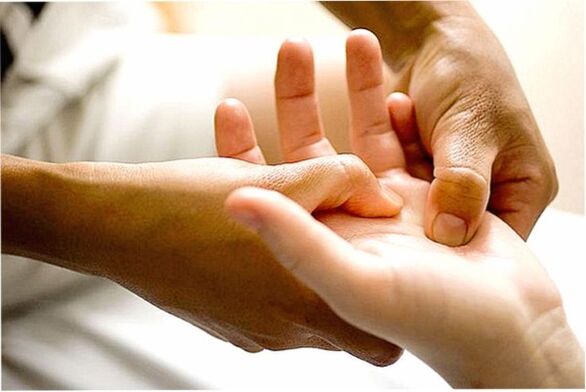
If it is simply a problem of physical load, taking the following supplements will help eliminate the problem:
- Omega-3 Fats;
- glucosamine and chondroitin;
- betaine.
All these products are sold in pharmacies and are actively used by athletes, whose physical activity is much higher than the average person.
Diet for joint pain
Poor nutrition is one of the most important factors that have a negative impact on joint health.You can prevent the development of diseases such as gout, arthritis and arthrosis, as well as reduce their course, by restricting your diet.
People prone to arthritis are advised to consume foods rich in:
- collagen (gelatin, soup, jellied meat);
- sulfur (poultry, grains and legumes, carrots, cabbage, apples);
- selenium (milk, cod, whole grain bread, seafood, seaweed);
- Omega-3 fats (fatty fish, flaxseed oil).
Foods that are not recommended to eat depend on the specific joint disease.
But, according to general recommendations, you should avoid:
- alcoholic beverages;
- salty and smoked products;
- canned meat;
- meat by-products.
After consulting with your doctor, you can clarify which diet plan is indicated in a particular case.
Finger gymnastics
Painful finger joints - the cause and treatment must be determined by a specialist.To combat this disease, you can use additional measures.
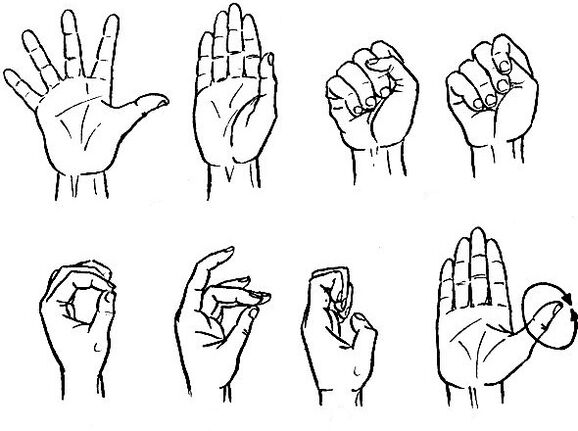
Exercise is indicated for osteoarthritis, as well as for its prevention:
- Clench your fingers gently for 30-60 seconds, release with maximum increase in the distance between the fingers.
- Gently press your palm on a flat surface (such as a table).
- Pinch movements (you can use a ball made of soft material).
- Press your palms on a flat surface and lift each finger one by one.
When doing this exercise, there should be no pain in the finger joints.Movement should be as smooth and gentle as possible.By regularly doing gymnastics, you can improve the mobility of your hands for many years.
Maintaining joint health is important at any age.If you identify the reason why your finger joint hurts in time and choose the appropriate treatment for this disease, you can avoid complications in the future.